
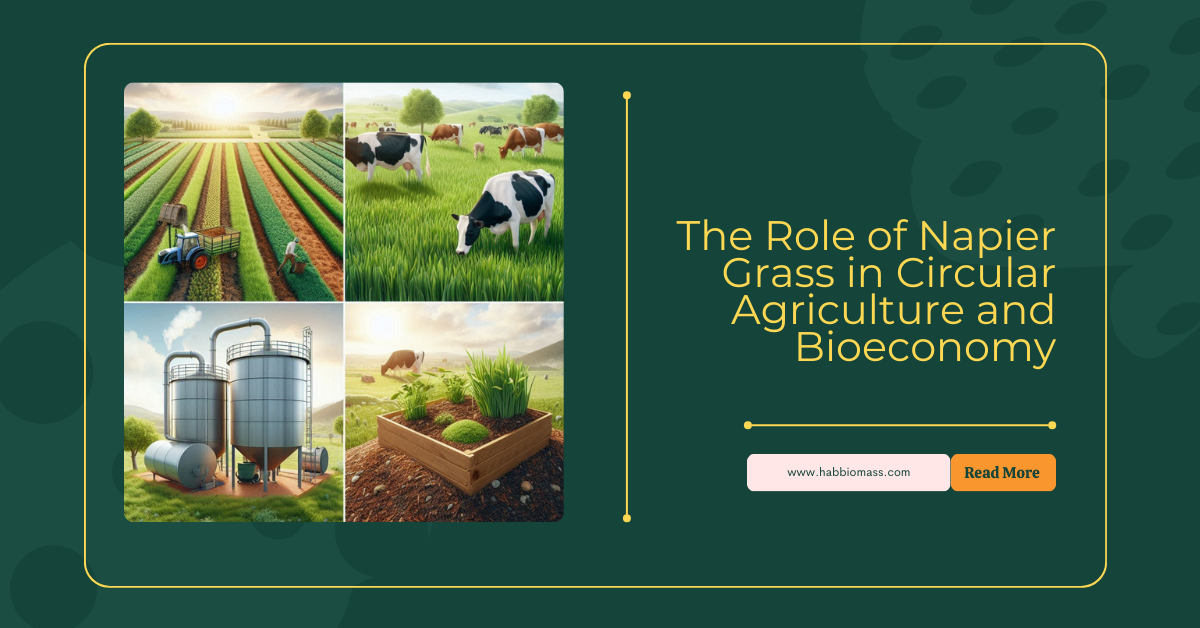
Napier grass is more than just a forage crop or energy source; it plays a crucial role in promoting a circular agricultural economy and a sustainable bioeconomy. Circular agriculture involves closing the nutrient and energy loops by recycling organic materials back into the ecosystem. This blog delves into how Napier grass contributes to this transformative approach in modern farming and renewable energy.
What is Circular Agriculture?
Circular agriculture focuses on reducing waste, reusing resources, and recycling organic matter to create a sustainable farming system. It contrasts with linear agricultural models that deplete resources and generate waste without considering long-term environmental impact.
Napier Grass in Circular Agriculture
Napier grass fits perfectly into the circular agriculture model due to its diverse applications:
1. Feed for Livestock: Napier grass is one of the most nutritious forage crops for livestock, particularly cattle and dairy animals. It can be harvested multiple times a year, providing a continuous supply of high-protein feed that promotes animal health and productivity.
2. Energy Crop for Biogas: After serving its purpose as livestock feed, any leftover Napier grass can be used as feedstock for biogas production, ensuring that no part of the plant goes to waste.
3. Soil Health Improvement: The root system of Napier grass prevents soil erosion and enhances soil structure. After harvesting, its residual biomass can be used as mulch or compost, enriching the soil with organic matter and nutrients.
Napier Grass and the Bioeconomy
The bioeconomy refers to an economy that uses biological resources to produce food, energy, and materials in a sustainable way. Napier grass is a key player in the bioeconomy due to its versatility:
• Biogas Production: Napier grass is a valuable raw material for producing biogas and CBG, which are clean and renewable energy sources. By turning organic waste into energy, Napier grass contributes to the bioenergy sector.
• Green Manufacturing: Beyond biogas, researchers are exploring ways to use Napier grass in green manufacturing processes, such as producing biodegradable materials and biofuels.
• Resource Efficiency: The cultivation of Napier grass is water-efficient and requires fewer chemical inputs, making it an eco-friendly crop that aligns with the principles of a sustainable bioeconomy.