
Introduction: The Growing Need for Renewable Energy
As the world grapples with the dual challenges of climate change and energy security, the shift towards renewable energy has become more urgent than ever. Traditional fossil fuels, which have powered global development for over a century, are not only finite but also contribute significantly to greenhouse gas emissions. In this context, renewable energy sources like solar, wind, and hydropower have gained prominence. However, a lesser-known but equally important player in the renewable energy revolution is agricultural waste.
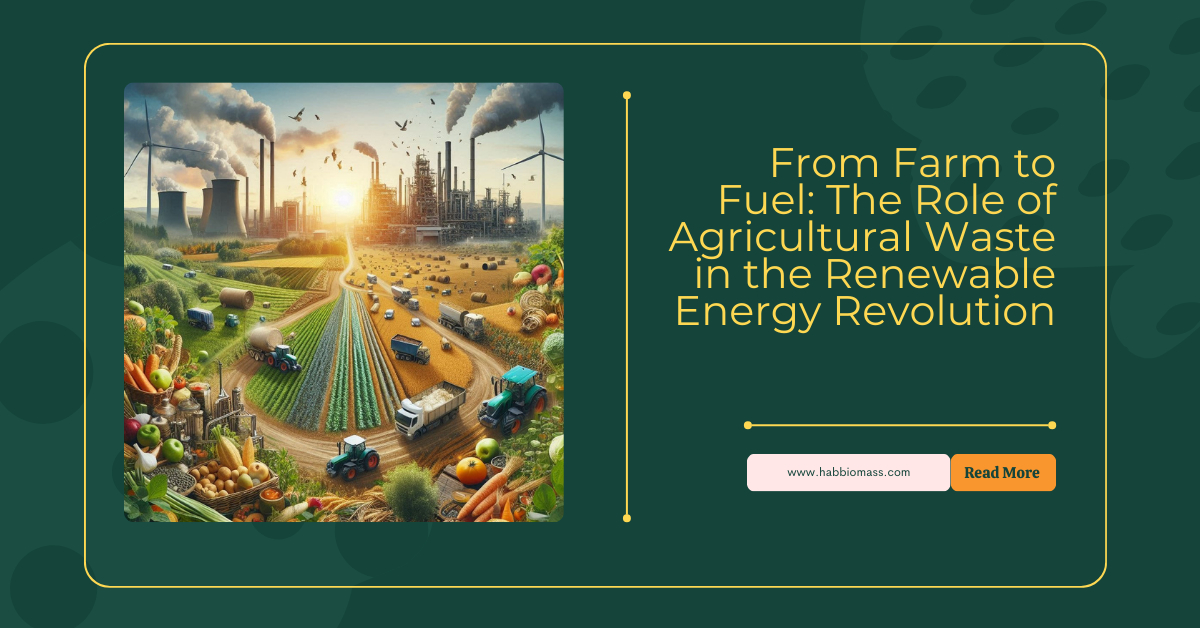
Agricultural waste, often seen as a byproduct of farming with little value, is being transformed into a powerful resource—biomass—that can fuel the future. This blog explores how agricultural waste is being harnessed to create sustainable energy solutions, driving the global transition to a cleaner, greener future.
Agricultural Waste: An Untapped Resource
Every year, billions of tons of agricultural waste are generated worldwide. This waste includes crop residues like straw, husks, and stalks, as well as animal manure and other organic materials. Traditionally, much of this waste has been burned or left to decompose, releasing carbon dioxide and methane into the atmosphere. However, advances in technology and a growing focus on sustainability have led to the development of methods to convert this waste into renewable energy.
Biomass energy, derived from organic materials like agricultural waste, is one of the most versatile and reliable forms of renewable energy. It can be used to produce electricity, heat, and even biofuels for transportation, making it a crucial component of a sustainable energy mix.
The Process: Turning Agricultural Waste into Biomass Energy
The conversion of agricultural waste into biomass energy involves several processes, each tailored to the type of waste and the desired energy output. One common method is direct combustion, where agricultural residues are burned to generate heat and electricity. This process is widely used in rural areas and small-scale power plants, providing a decentralized energy source that can reduce reliance on fossil fuels.
Another method is anaerobic digestion, where organic waste is broken down by microorganisms in the absence of oxygen. This process produces biogas, a mixture of methane and carbon dioxide that can be used as a fuel for heating, electricity generation, or as a renewable substitute for natural gas. The leftover material from anaerobic digestion, known as digestate, can also be used as a nutrient-rich fertilizer, creating a closed-loop system that benefits both energy production and agriculture.
Pyrolysis and gasification are more advanced processes that convert agricultural waste into biochar, syngas, and bio-oil. These products can be used for energy generation or as feedstocks for chemical industries, further expanding the potential applications of agricultural waste in the renewable energy sector.
Biomass as a Key Player in Sustainable Development
The use of agricultural waste for biomass energy has significant implications for sustainable development. First, it provides a way to manage waste effectively, reducing the environmental impact of farming and preventing harmful emissions from open burning. By turning waste into a resource, biomass energy contributes to a circular economy, where materials are reused and recycled, minimizing waste and maximizing value.
Second, biomass energy offers a reliable and scalable renewable energy source. Unlike solar and wind power, which are dependent on weather conditions, biomass can be produced and utilized consistently, providing a stable energy supply. This makes it particularly valuable in regions with limited access to other forms of renewable energy.
Moreover, biomass energy supports rural development by creating new income streams for farmers. By selling agricultural residues for energy production, farmers can diversify their revenue sources, reduce their reliance on traditional markets, and contribute to local energy security. This, in turn, helps to strengthen rural economies and improve livelihoods.
Case Study: HAB Biomass and the Renewable Energy Revolution
HAB Biomass Pvt. Ltd. is at the forefront of the renewable energy revolution, transforming agricultural waste into high-value biomass products like briquettes, pellets, and biochar. By converting waste into fuel, HAB Biomass is helping to reduce greenhouse gas emissions, promote sustainable agriculture, and provide clean energy solutions to communities across the globe.
Our innovative approach not only addresses the environmental challenges associated with agricultural waste but also supports the global transition to renewable energy. Through partnerships with farmers, local governments, and industry leaders, we are scaling up the use of biomass energy, demonstrating its potential to power a sustainable future.
The Future of Agricultural Waste in Renewable Energy
As the world continues to search for sustainable energy solutions, the role of agricultural waste in the renewable energy sector is set to grow. Advances in technology and increased investment in biomass energy infrastructure are making it easier and more cost-effective to convert waste into fuel. At the same time, global initiatives to reduce carbon emissions and promote clean energy are creating new opportunities for biomass energy to contribute to a low-carbon economy.
The potential of agricultural waste as a renewable energy source is vast. By harnessing this untapped resource, we can reduce our dependence on fossil fuels, lower greenhouse gas emissions, and create a more sustainable and resilient energy system. The future of renewable energy is not just about wind turbines and solar panels—it’s also about turning waste into wealth, from farm to fuel.
Conclusion: Embracing the Power of Agricultural Waste
The transformation of agricultural waste into biomass energy is a powerful example of how innovative thinking can turn challenges into opportunities. By reimagining waste as a resource, we can fuel the renewable energy revolution and pave the way for a more sustainable future.
At HAB Biomass, we are proud to be part of this revolution, driving change through sustainable waste management and renewable energy production. As we continue to explore new ways to harness the power of agricultural waste, we invite others to join us in building a cleaner, greener world—one that is powered not by fossil fuels, but by the renewable energy of the future.