
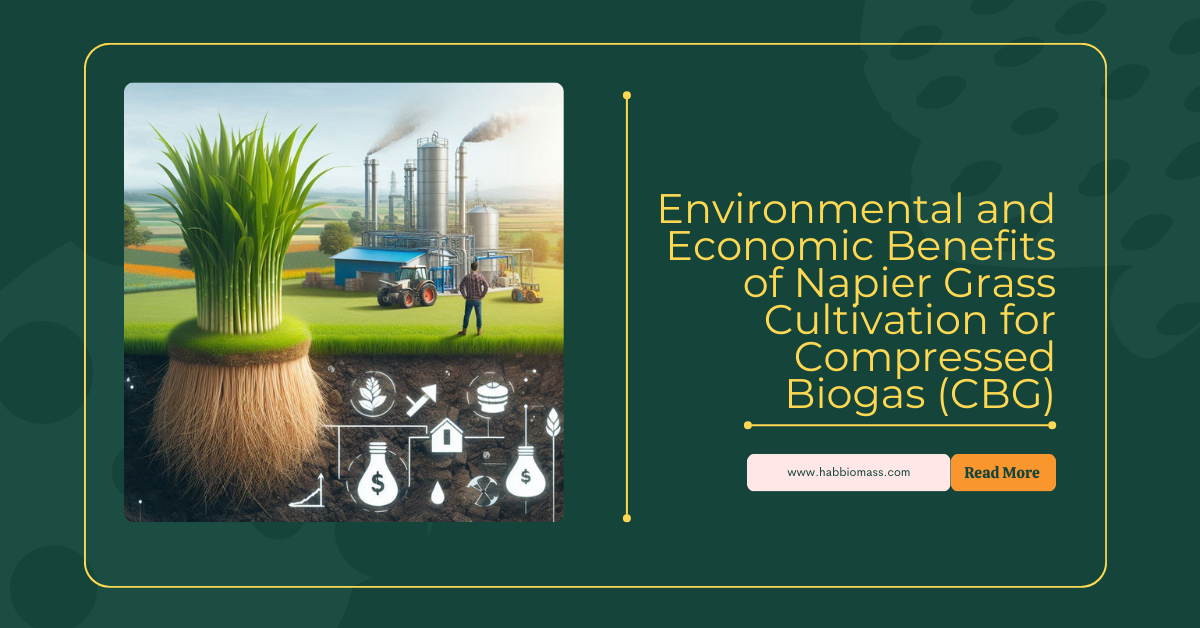
Napier grass, often known as elephant grass, is increasingly becoming a key player in the world of sustainable agriculture, not only due to its resilience and high yield but also because of its critical role in producing renewable energy through Compressed Biogas (CBG). The dual environmental and economic advantages that Napier grass offers are reshaping farming and energy practices, especially in the context of the global push towards cleaner energy solutions.
1. Environmental Benefits of Napier Grass Cultivation
Napier grass offers numerous environmental benefits that make it a sustainable solution for energy production and agricultural practices:
a. Carbon Sequestration and Climate Change Mitigation
Napier grass has a fast growth cycle and can capture significant amounts of atmospheric carbon dioxide (CO2). As it grows, it absorbs CO2 and stores it in its roots, stems, and leaves, thereby reducing the greenhouse gases in the atmosphere. This makes it an excellent crop for mitigating climate change. When converted into CBG, Napier grass also plays a part in replacing fossil fuels with cleaner energy, further reducing carbon emissions.
b. Soil Health Improvement
Unlike many crops that degrade soil quality over time, Napier grass helps improve it. The deep root systems of Napier grass prevent soil erosion by anchoring the soil and protecting it from heavy rains and wind. Its roots also help in water retention, making it ideal for dry and semi-arid regions. Over time, this grass can enrich the soil with organic matter, promoting biodiversity in the soil ecosystem.
c. Reduced Dependency on Chemical Fertilizers
Farmers growing Napier grass for CBG can also use the byproducts of the biogas production process—such as nutrient-rich digestate—as organic fertilizer. This reduces the reliance on chemical fertilizers, which often cause soil and water pollution. The digestate enhances soil fertility and promotes healthier, more sustainable agricultural cycles.
2. Economic Benefits for Farmers and Communities
The cultivation of Napier grass has the potential to offer substantial economic benefits to farmers, rural communities, and the broader renewable energy market.
a. High Yield and Productivity
Napier grass is known for its high biomass yield, making it one of the most efficient crops for energy production. Its fast-growing nature means that farmers can harvest it multiple times a year, maximizing their return on investment. The surplus of grass that isn’t needed for livestock feed can easily be directed towards CBG production, providing farmers with an additional revenue stream.
b. Job Creation and Rural Development
The production of compressed biogas from Napier grass opens up job opportunities in rural areas. From cultivating and harvesting the grass to operating biogas plants, this growing industry requires a skilled workforce, offering farmers and local workers a chance to diversify their income sources. Additionally, rural economies benefit from the development of energy infrastructure and the improvement of local services tied to biogas production.
c. Market for Renewable Energy
As countries around the world transition to more sustainable energy sources, the demand for renewable fuels like CBG is increasing. Napier grass, with its rapid growth and high-energy yield, provides an ideal feedstock for this expanding market. Farmers growing Napier grass are well-positioned to tap into the rising demand for biogas, securing long-term contracts with biogas producers and contributing to the global shift toward cleaner, renewable energy.
d. Government Incentives and Support
Many governments are now offering incentives to encourage the production of renewable energy sources like CBG. In countries like India, programs such as the Sustainable Alternative Towards Affordable Transportation (SATAT) initiative support biogas production by offering financial and logistical backing to farmers and energy producers. Farmers growing Napier grass can benefit from subsidies, tax breaks, and guaranteed purchasing agreements, which reduce their financial risk and offer more predictable returns.
3. Positive Impact on Energy Independence and Sustainability
As nations strive for energy independence and reduced carbon footprints, Napier grass serves as a sustainable solution to both these challenges:
a. Energy Independence and Security
Countries that rely heavily on imported fossil fuels are vulnerable to price fluctuations and geopolitical risks. By promoting the cultivation of Napier grass and the production of CBG, nations can increase their energy security. Napier grass provides a locally available, renewable resource that can be grown and processed domestically, helping to reduce reliance on imported energy and strengthening national energy independence.
b. Transition to a Circular Economy
Napier grass aligns with the principles of a circular economy, where waste from one process becomes a valuable resource for another. The waste biomass from CBG production can be recycled back into the agricultural system as a natural fertilizer, minimizing waste and making the entire process more sustainable. By integrating Napier grass cultivation with biogas production, countries can move toward a more efficient, low-waste economy that benefits both the environment and the economy.
Conclusion
The cultivation of Napier grass for compressed biogas is not only an environmentally sustainable solution but also an economically viable one. Its ability to sequester carbon, improve soil health, and provide renewable energy makes it a valuable asset in the fight against climate change. At the same time, its high yield, role in job creation, and contribution to rural development present significant economic opportunities for farmers and communities.